Charging When electrons move from object to object, it produces electricity. It is called charging. We can charging by friction, induction and conduction. -Friction : when we rub two materials together, one object will be positive charged and other one will be negative charged-Induction : when negatively charged object moves close to neutral object, electrons in negatively object will get closer to the neutral object, so electrons in neutral object will get move away. (Look at the picture below 1)-Conduction : When negatively charged object touches to neutral object, electrons in negatively object will move to neutral object. When neutral object changes to negatively charged object, they repel each other. (Look at the picture below 2 ) 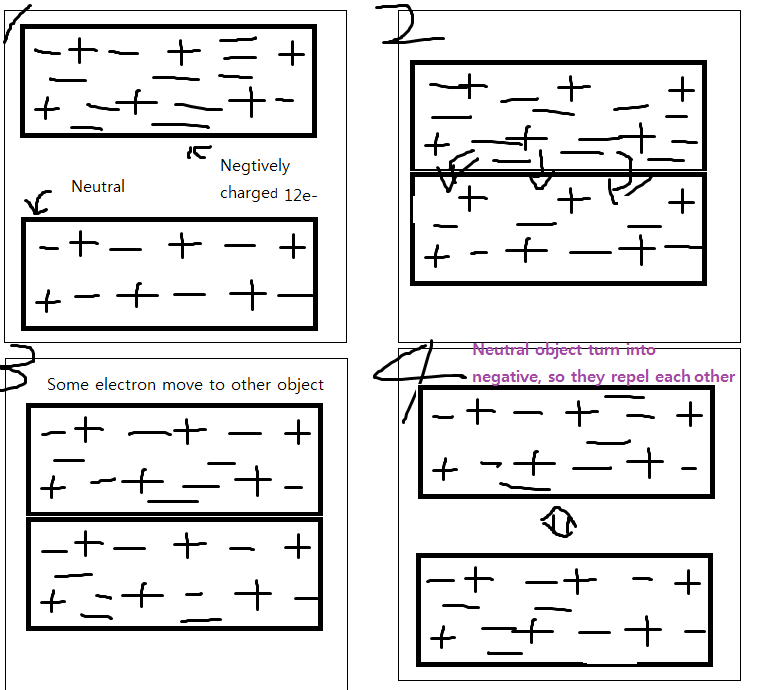 |
Discharging What is opposite meaning of charging? It is discharging. Discharging is to remove all electric charge. So there are three common ways to discharging. -Grounding : we should connect charged object to the Earth, so charges are allowing to flow into Earth's surface. (Look at the picture below 1)-Discharging at a point : electrons collect at a point on an object and repel each other so that they each off the object. (Look at the picture below 2)-Discharging through the air : charge will leak off an object to the water molecule in the surrounding air and when the air is dry a greater static change can be built up, because there aren't as many water molecules to soak the charge.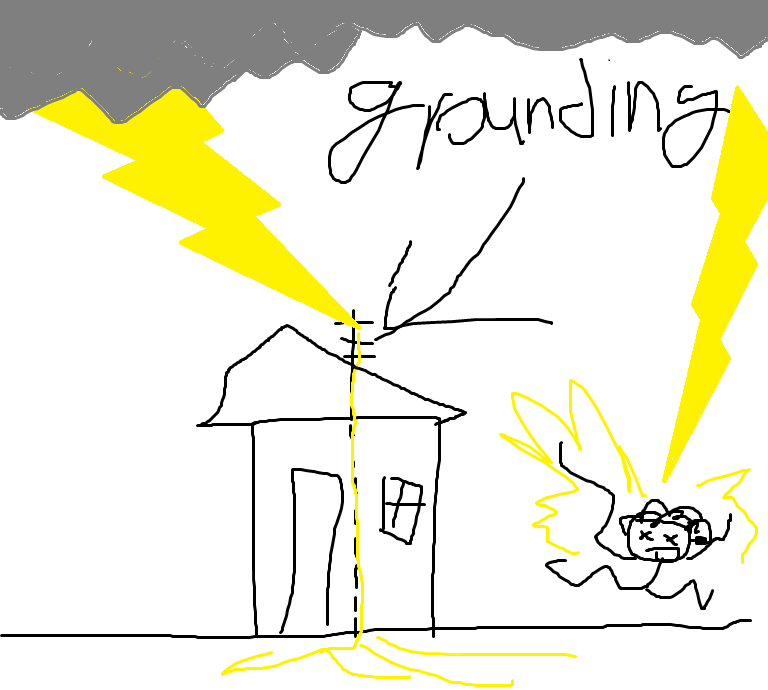 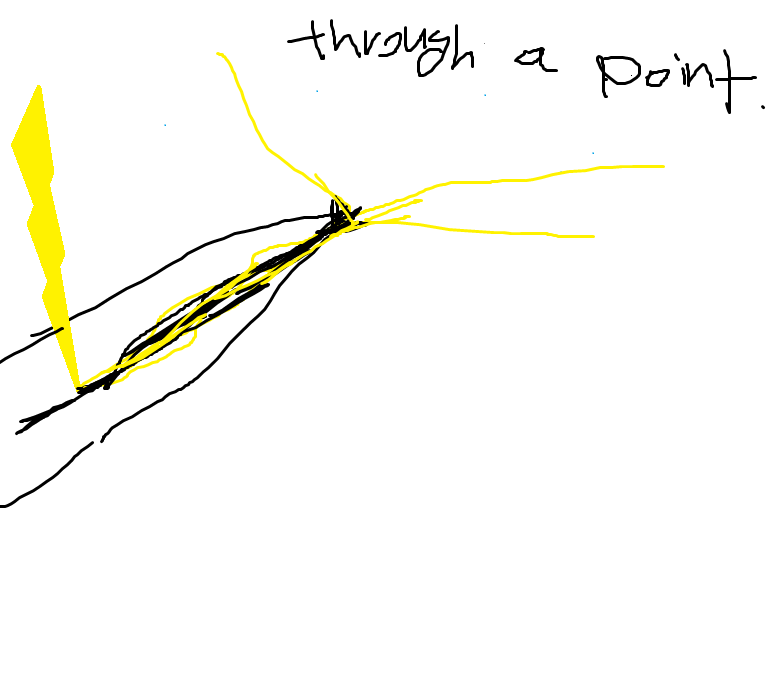 |
|
Conductor and Insulator They are very easy to compare. Most important difference is movement of electrons. Conductor allows electrons to move freely and insulator do not allows electrons to move easily. Usually conductors are metal and insulators are non-metal, that'why electricity can't flow in non-metal. But when static there is charge that is held in one place (static electricity) , only insulators can retain a static charge. 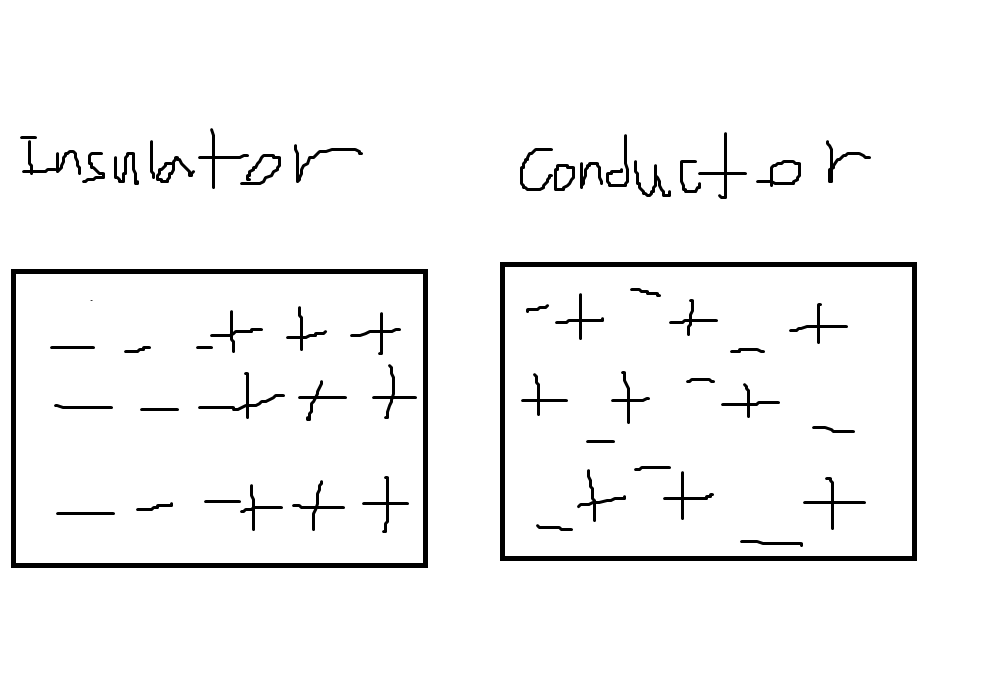 |
||
